Students who attained a placement score of 320 or higher in this year’s Grade 6 PEP examinations are eligible to apply for one of 17 five-year scholarships or 10 one-time grants aimed at easing the cost of secondary education.
Under the programme, 14 students will receive the JN Foundation PEP Parish Scholarship, while three students will be awarded the JN Bank Easi-Save County Scholarship. An additional 10 students will benefit from one-time educational grants sponsored by JN Money Services.
The programme will also provide 20 scholarships to children of employees across The Jamaica National Group.
Sydoney Preddie, Lead for Youth and Education at the JN Foundation, said the scholarship programme reflects the organisation’s long-standing commitment to investing in Jamaica’s youth.
“Every year, we are inspired by the determination and achievements of students across the island. Through this programme, we are not only recognising academic excellence but also helping to create opportunities that empower young people to pursue their goals and contribute meaningfully to Jamaica’s development,” she said.
The scholarship programme was established 43 years ago.
Ms Preddie noted that recipients become part of the JN Scholars community, which provides support and development opportunities beyond financial assistance. These include annual summer camps featuring local and international presenters, workshops focused on leadership, financial literacy, stress management and goal setting, as well as opportunities to engage with leaders across The Jamaica National Group.
She added that scholars will also benefit from a new mentorship programme set to be introduced in the upcoming academic year.
“Our scholarship programme goes beyond funding education. We are committed to helping students develop the confidence, skills and networks they need to thrive both inside and outside the classroom,” Miss Preddie said.
To qualify, applicants must have sat the 2026 PEP examinations, must not be recipients of a government or other long-term scholarship, and must have maintained a relationship for at least one year with a JN Group company, such as JN Bank, JN Life Insurance, the Jamaica Automobile Association (JAA), or JN Money Services.
Parents and guardians are encouraged to review the eligibility requirements and submit applications online at www.jnfoundation.com/jn-scholarships by Wednesday, July 15, 2026.
Photo Caption: Volunteers take a group photo after completing work at DRB Grant Demonstration Basic School in Montego Bay, St. James.
Living thousands of miles away, but never far from home, Jamaican diaspora volunteers rolled up their sleeves to help restore the DRB Grant Demonstration Basic School in Catherine Hall, Montego Bay, a learning institution still recovering from the devastating effects of Hurricane Melissa last October.
Armed with paintbrushes, gardening tools and a deep commitment to giving back, they joined representatives from the JN Foundation and local volunteers for a Day of Service- transforming the school while sending a powerful message of solidarity to students, teachers and the wider community.
The initiative formed part of activities for the 11th Jamaica Diaspora Conference and was organised by the JN Foundation.
Among the volunteers was Jamaican-British businessman and celebrity chef Keith Valentine Graham, better known as Levi Roots, founder of the globally recognised ‘Reggae Reggae Sauce’ brand in the United Kingdom. Swapping his kitchen utensils for a paintbrush, he embraced the opportunity to contribute to the school’s restoration.
“I’m here today as a day of service because this is what service is about,” he said. “It’s about what you can do for others. So, I’m here at the basic school helping out. I’ve swapped a spatula for a paintbrush. It’s just doing my service, doing my duty, helping out as much as I can,” he shared.
The Clarendon native said the experience stirred up fond childhood memories. “I think it’s fantastic to hear the voices of the children because it brings me back to when I was a kid in school making these same sounds. It’s just really beautiful to me,” he shared. “Doing something that is out of the ordinary for me feels really good in this environment.”
Photo Caption: Jamaican-British businessman and celebrity chef Keith Valentine Graham, better known as Levi Roots, founder of the globally recognised ‘Reggae Reggae Sauce’ brand in the United Kingdom refresh a mural at the school.
The Rt Rev Rose Hudson-Wilkin, Bishop of Dover and the first Black woman to become a bishop in the Church of England, described the experience as both emotional and inspiring. Born and schooled in St James, she reflected on the significance of returning home to support the next generation.
“It is really a delight and a joy and a memorable moment to be here in the city of my birth, the place where I was educated, the place that nurtured me and made me who I am today,” the former Chaplain to Queen Elizabeth II and the House of Common- Britain’s parliament said.
She emphasised that every contribution, no matter how small, matters.
“Whether it’s one or two strokes of the brush, all of us have used the gifts we have. It’s wonderful seeing and hearing the children’s voices throughout the day.” Most importantly, she said, the presence of Diaspora volunteers conveyed a message that the children are not forgotten.
That sentiment was echoed by Paulette Simpson, Executive for Corporate Affairs and Public Policy for the Jamaica National Group in the United Kingdom, who commended the commitment and generosity of the volunteers who travelled from the United Kingdom, the United States, Canada and other countries to support the initiative.
Miss Simpson noted that the response from members of the Jamaican diaspora and international partners in the aftermath of Hurricane Melissa had been overwhelming, with individuals and organisations contributing time, resources and financial support to assist affected communities.
“The outpouring of support has been truly inspiring. In the wake of Hurricane Melissa, Jamaicans and friends of Jamaica from the United Kingdom, the United States, Canada and beyond responded with compassion and generosity. Their willingness to volunteer, donate and give back demonstrates the strength of our global community and the deep commitment many people have to helping vulnerable families recover and rebuild,” she said.
Throughout the day, volunteers painted classrooms, refreshed outdoor spaces and engaged with students, helping to create a brighter and more welcoming environment for learning.
For Heather Wiggan Vassell, principal of the school, the Day of Service represented far more than a restoration project. It was a visible demonstration of community support at a time when the school needed it most. Reflecting on the aftermath of Hurricane Melissa, she recalled the devastation left behind.
“When Hurricane Melissa came, it tore through our community. The DRB Grant Demonstration Basic School was left broken. Classrooms were damaged, learning was interrupted, and our children’s sense of safety was shaken,” she said.
The principal credited the JN Foundation’s intervention with helping the school begin the journey towards recovery.
“In that moment of loss, the JN Foundation stepped in, not just with financial support, but with hands, hearts and time on the ground,” she outlined. “Because of your physical presence, our children saw that they were not forgotten. You did not just help us rebuild a building; you helped us rebuild hope. You gave our DRB Grant family a place to learn again and our students a place to dream again.”
She said the return of volunteers through the Diaspora Day of Service reinforced the message that the school continues to have a network of supporters committed to its future.
The Diaspora Day of Service, however, was only one chapter in a broader recovery effort said Claudine Allen, general manager of the JN Foundation, emphasising that rebuilding the school will require sustained support from multiple partners.
“Today was just a small part of a very long journey that the DRB Grant Demonstration Basic School has ahead of it,” she said. “You have seen the facility, and you have seen the needs. There are urgent requirements for furniture, school supplies, playground equipment and other resources. The JN Foundation is committed to being part of that journey and ensuring that we leverage our resources to give the school what it needs.”
She noted that the initiative brought together a diverse group of supporters, including Diaspora Conference delegates, corporate partners, volunteers, educational institutions and community stakeholders, all united by a common goal.
“What progress we made today will be multiplied through the partnerships that emerge from this visit,” she said. “Through mural painting, landscaping, tree planting and other improvements, volunteers have helped to create a more welcoming and inspiring environment for the children. But more importantly, they have demonstrated what can happen when people come together in service of a community.”
The JN Foundation general manager also highlighted the significance of the school’s namesake, early childhood education pioneer Dudley R. Grant, whose legacy continues to shape learning in Jamaica and beyond.
“Dudley Grant was a visionary whose ideas about early childhood education were far ahead of his time,” she said. “More than 60 years later, the principles he championed are still being practised here. We wanted today’s restoration effort to honour that legacy and help ensure that future generations of children have the nurturing environment they need to learn, grow and thrive.”
With prices climbing, from groceries to fuel, many households are feeling the strain. Inflation, higher interest rates and general economic uncertainty have made every day budgeting more challenging than ever.
Rose Miller, financial education consultant with the JN Foundation, says the key to managing this period isn’t panicking; it’s planning.
“People can’t control inflation, interest rates or the price of fuel,” Mrs Miller says. “But what they can control is how they manage their financial resources to ensure they remain afloat.”
Her advice focuses on simple, practical steps that can help consumers reduce stress and stay financially grounded, even as economic pressure mounts.
Instead of worrying, she is encouraging households to redirect their energy towards what they can control, such as how they spend, borrow and save. Making intentional choices about these behaviours can have a meaningful impact on overall financial health.
Get Everyone on the Same Page
For households, communication is critical, she noted, “If you’re in a household, you need to have a conversation and get everyone aligned,” Mrs Miller says. “And this is true whether there is a single or multiple incomes, but especially so for single income households.
“Everyone has to be on the same page about how money is being spent and the plan to get through this period.”
Without frank and honest discussions about the family’s finances, frustration and conflict can quickly arise, as a result of misaligned goals, behaviours and expectations, she added.
It’s Time to Revisit the Budget
“If budgeting has fallen by the wayside, now is the time to bring it back. We’re going back to the budget, and this time, we have to be very intentional,” Mrs Miller says.
That means closely examining daily spending habits, being more conscious about purchases, and paying attention to where and how money is being spent. Shopping smarter, exploring alternatives, and cutting back on non-essentials can help stretch household income further.
“Think about what you buy, where you shop, and whether there’s a more affordable option,” she advises.
And with interest rates likely to rise, Mrs Miller recommends exercising caution when it comes to new borrowing, especially for large purchases.
“This is not the time to rush into major loans if you can avoid it,” she says. “Higher interest rates mean higher monthly payments, and more pressure on the budget.”
For those already struggling under the weight of existing debt, however, there may be relief options worth considering. Mrs Miller points to debt consolidation as one possible strategy.
“If debt is already strangling your finances, consolidating could provide a lifeline,” she explains. “By extending the repayment period, you would be able to reduce your monthly payments and create some breathing room.”
Mrs Miller emphasises that financial stress doesn’t just come from money, but oftentimes from uncertainty.
“This is going to be a trying time for many people,” she says. “But with careful planning, you can reduce stress and put yourself in a better position to cope.”
Small steps taken now, adjusting spending, talking openly about finances, and managing debt responsibly can make a significant difference to our outcome.
“The goal isn’t perfection,” Mrs Miller adds. “It’s survival and stability. And with the right approach, households can navigate this period of economic uncertainty with greater confidence.”
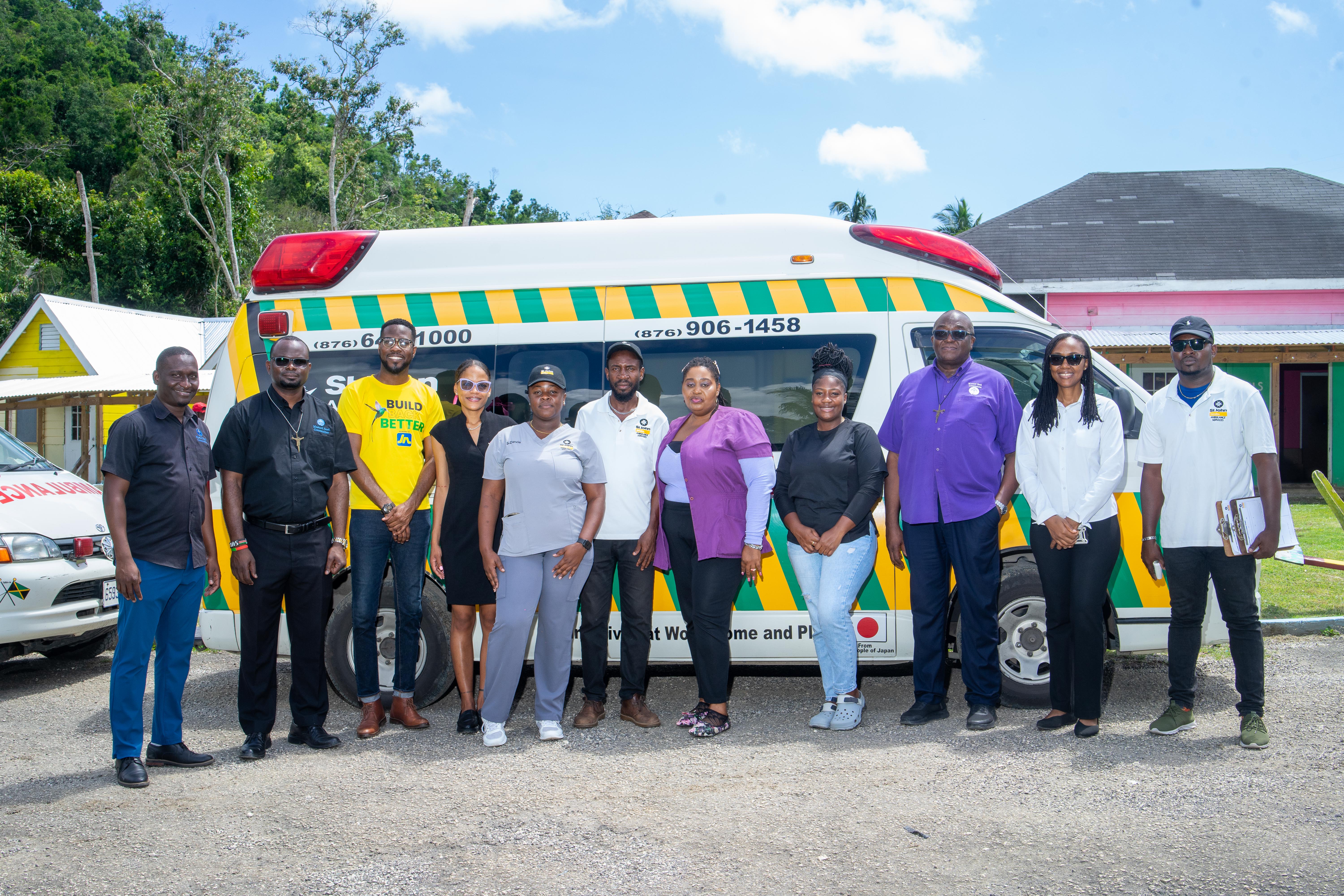
Photo Caption: Members of the JN Foundation, St John Ambulance team and Mustard Seed Communities take a group photo.
The JN Foundation has channelled approximately $1.4 million to the Mustard Seed Communities’ (MSC) Blessed Assurance home in St James to assist with critical rebuilding following severe damage by Hurricane Melissa.
The funds were allocated from monies raised through the ISupportJamaica Fund, activated by the JN Foundation as Hurricane Melissa made landfall in Jamaica. The Fund received contributions mainly from Jamaicans overseas and friends of Jamaica.
Blessed Assurance, which houses adults and children with physical and developmental challenges, is still recovering from severe flooding that displaced residents, destroyed or severely damaged infrastructure and assets, including cottages, utilities, and essential equipment.
Reverend Father Garvin Augustine, executive director of Mustard Seed Communities, said the facility was among MSC’s hardest hit, with floodwaters rising to roof level in some areas, forcing staff to evacuate residents, many of whom are children, to upper floors for safety.
“All the cottages were flooded, bedding and furniture were destroyed, and there was no access to the property for days because the road was completely washed away,” he explained. “But through the generosity of our partners and the wider community, we have been able to begin the long and difficult process of rebuilding.”
Thirty per cent of cash donations to the ISupportJamaica Fund have been earmarked to repair severely affected facilities for the vulnerable and/or at risk like Blessed Assurance, while 40 per cent will support early childhood institutions and the remaining 30 per cent will be channelled to first responders and community groups actively involved in the recovery process.
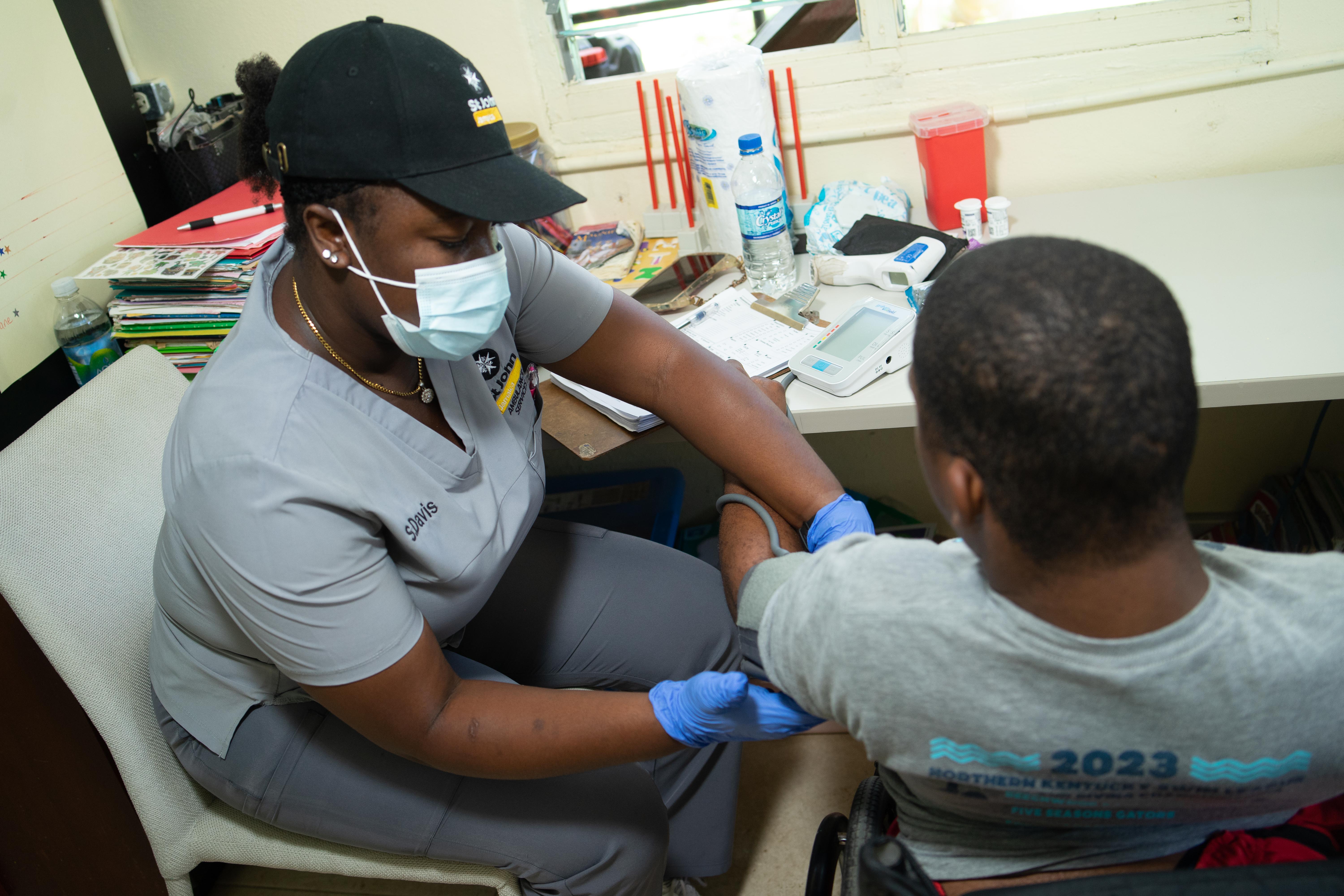
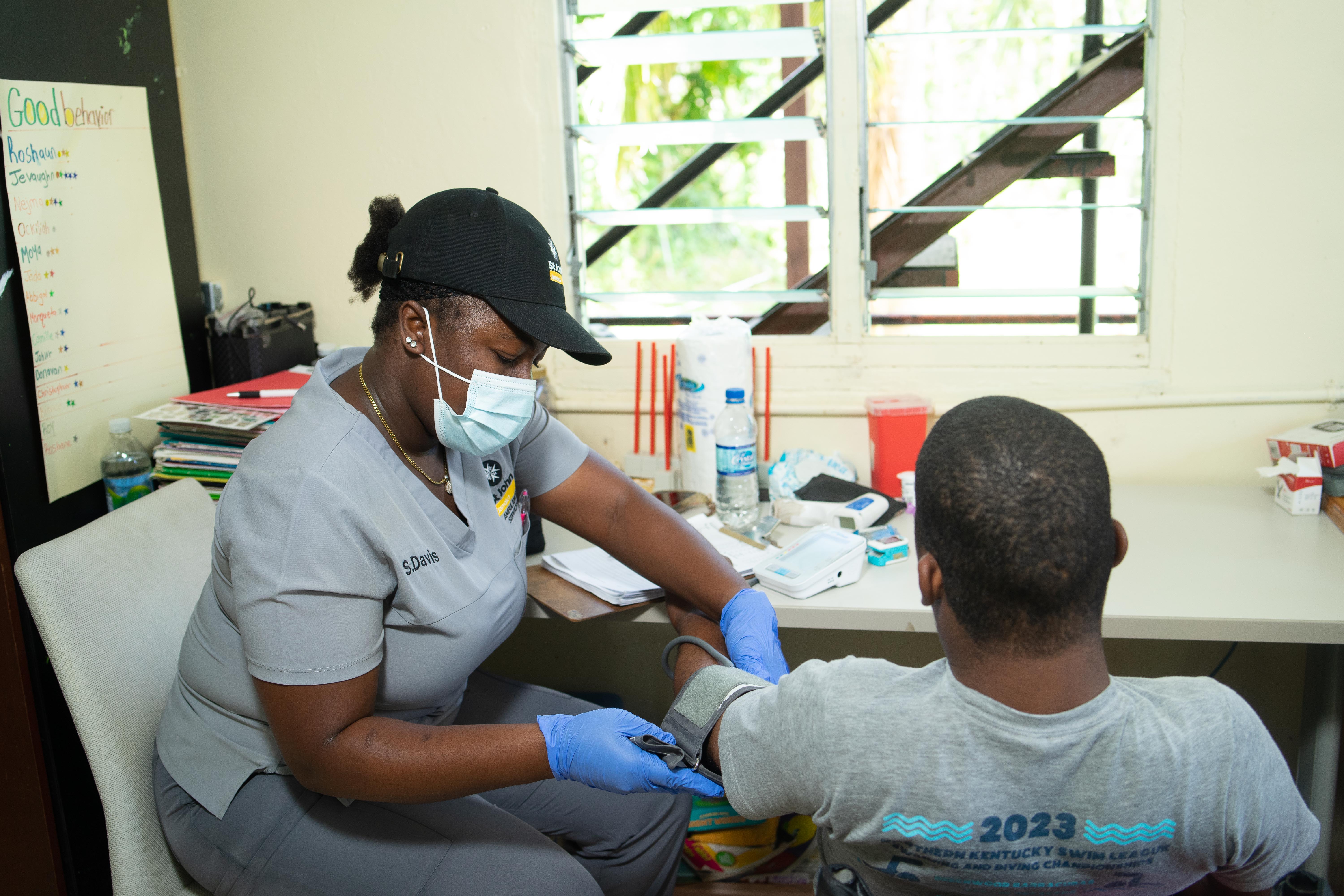
Photo Caption: Shannon Davis (left), emergency medical technicians at St John Ambulance takes the vitals of residents of Blessed Assurance.
“Mustard Seed Communities makes for a worthy beneficiary, as the organisation is strong on mission credibility, operational competence and institutional trust. Over the years, we have collaborated to help to bring relief to its residents, most of whom are the most vulnerable in our society,” Omar Wright, lead, Environment and Community Development at the JN Foundation, said.
In addition to the financial contribution, the JN Foundation collaborated with St John Ambulance Jamaica to provide much-needed health services to residents and members of staff. The outreach forms part of a wider series of medical missions funded by Corus International, an ensemble of faith-based organisations. Since the passage of the hurricane 17 missions have been led to date by the JN Foundation across rural and underserved communities.
Mr Wright said the medical outreach was launched to address persistent gaps in access to care post Melissa.
“The primary objective is to reach vulnerable communities, particularly the elderly and persons living with disabilities, who may not have seen emergency services or relief since the hurricane,” noted Mr Wright. “At Blessed Assurance, the mission was especially impactful because of the complex medical needs of the children and the caregivers.”
He explained that the programme targets underserved and hard‑to‑reach communities, particularly in the western parishes.
He noted that the initiative aims to reach up to 1,200 residents by the end of the programme. The medical team, which included doctors, nurses, emergency medical technicians, and ambulances supplied by St John Ambulance, conducted basic medical screenings, including blood pressure and blood sugar tests, and pre-hospital assessments. Prescription refills and limited on-site medication dispensing were also provided.
Photo Caption: Omar Wright (left), lead, Environment and Community Development at the JN Foundation presents a cheque to Reverend Father Garvin Augustine, executive director of Mustard Seed Communities to carry out repairs to Blessed Assurance in St James, which was damaged by Hurricane Mellisa last year. The presentation was made recently at the mission.
The members of staff welcomed the medical mission, noting that access to care is often delayed or avoided, even though stress and anxiety levels have remained high in the aftermath of the hurricane.
Alecia Bowyer, administrative assistant at the mission, commended the services offered by the medical mission. “I received excellent service; the medical team was helpful and attentive. They have reminded me of the importance of taking better care of my health and how I can improve my diet,” she said.
Meanwhile, Karen Miller Bogle, a family nurse practitioner with the St John’s Ambulance team, reflected on the experience, noting the importance of gratitude and collective action.
“In everything, give thanks. Sometimes you may feel that your situation is very difficult, but when you participate in these outreaches, you realise that others are facing far greater challenges and are still doing their best to survive. It underscores how important it is for people to come together and work as a team, as this ultimately benefits the entire community,” she said.
Photo Caption: Members of the Corus International team, Amy Vu (left) and Emily Grose (second left), engage in conversation with Claudine Allen (centre), general manager of the JN Foundation; Omar Wright (second right), lead for environment and community development programmes at the JN Foundation; and Sanchia Merchant, community liaison officer at the Social Development Commission, during a medical mission at Wakefield Baptist Church in Trelawny on April 18.
When representatives from the faith-inspired global organisation, Corus International, arrived in Jamaica in April, their goal was clear: to support recovery in action and document how their partnership with the JN Foundation has been aiding progress in communities rebuilding after Hurricane Melissa. However, being on the ground and engaging directly with community stakeholders has not only provided them with valuable perspective but deepened their appreciation of both the challenges and the impact of ongoing efforts.
Working alongside the JN Foundation and St John Ambulance Jamaica, the Corus team, which has provided part funding for some of the initiatives, joined the medical mission to Wakefield, Trelawny on Saturday April 18. The outreach brought critical healthcare services directly to residents still feeling the effects of the category five hurricane that severely damaged western Jamaica last October.
Sixty-five people received medical attention during the mission, and residents were also given relief packages made possible through the combined support of Corus International and the JN Foundation.
Emily Grose, associate director for humanitarian programming at Corus International, said supporting Jamaica was not just about providing immediate relief, but also about investing in recovery efforts that help communities to build back better.
“Part of our mandate is that we are agile, we respond immediately and we provide lifesaving services, but we’re also dedicated to communities for their recovery as well,” she said noting that “Being on the ground and seeing the reality of the situation is truly such a different picture. Talking to people from the community, community representatives and the JN Foundation team, you really get a sense of how devastating the hurricane was and I can see how critical the services are and for our project and our team to show up in these moments.”
She emphasised that the partnership with the JN Foundation was a natural fit as their values closely align, making the collaboration not only strategic, but meaningful. Following the launch of its own appeal fund to support hurricane-affected communities after the major storm, Corus International engaged the JN Foundation to identify the most effective ways to deliver meaningful support to those in need.
“In discussing with JN Foundation, we found this was the approach they were taking, having done the needs assessments in the most affected parishes,” she said. “For Corus International, it’s always important for us not to come with a set of ideas in mind, but specifically to respond to the needs on the ground,” she further explained.
Corus International, headquartered in Washington DC in the United States of America, conducts humanitarian and development work in 30 countries across the Americas, Africa, Europe and Asia. Claudine Allen, general manager of the JN Foundation, said the donor team’s first-hand engagement in Jamaica validated what the JN Foundation has been reporting through its field operations. She confirmed that support from Corus International has enabled 12 of the more than 20 medical missions coordinated by the JN Foundation, and supported by several partners, across hurricane-affected parishes to date.
“Through Lutheran World Relief, a Corus International entity, their business is emergency and crisis response and so they were able to give us advice and financial support to expand the number of missions that we executed and they’ve come to Jamaica to be a part of the final phases of the execution,” she shared.
Underscoring the importance of continuing these activities, Ms. Allen said that while conditions have improved and “physical progress is visible” since the first mission, ongoing demand for health services persists.
“Being able to see a doctor is something we take for granted … There are many Jamaicans who don’t have the resources or don’t have the opportunity to go sit with a doctor and receive a check-up.”
This is the reality for 73-year-old Wakefield resident Mertelda Hemmings, who was first in line for the mission to the community, despite her home still damaged from the hurricane. The storm took her roof, which is currently covered with cardboard and damaged appliances and furniture, including a new television she received just before the disaster struck.
Ms. Hemmings, who lives alone with physical health challenges, said the initiative delivered more than healthcare. It also brought financial relief, as she is unable to afford regular visits to her doctor.
“I’m happy for this, that’s why I was number one in line,” she said. “Somebody told me about it while I was coming from church Sunday and as I woke up today, I spread my bed and came here. I appreciate it.”
Photo Caption: Omar Wright (left), lead, environment and community development at the JN Foundation observes construction taking place at the Blessed Assurance home for the vulnerable in St James operated by Mustard Seed Communities (MSC). The facility cares for adults and children with physical and developmental challenges. Showing the work being done to Mr Wright is Father Garvin Augustine, executive director, MSC. The home has received $1 million from the ISupportJamaica Fund to assist with restoration after it was severely damaged by Hurricane Melissa.
Even before survivors of the ferocious Category 5 Hurricane Melissa began to rebuild their lives, the JN Group was busy galvanising partners- Jamaicans overseas and friends of Jamaica- to be ready to support the rebuilding process.
As the hurricane bore down on the country, the Group reactivated the ISupportJamaica Fund for Hurricane Melissa, appealing to especially Jamaicans overseas to donate cash and in some cases, kind, to help families, institutions, vulnerable groups and the communities they once called home to persevere against the odds.
From organising packed concerts to contributions of cans of food, hygiene and emergency items; from remitting funds via JN Money to donating via issuportjamaica.com with a credit card, Jamaicans in the diaspora played their part in raising some $14 million to give families, friends and communities back home the opportunity to thrive again.
“The response was overwhelming”,
Paulette Simpson, executive, corporate affairs at the JN Group- a key mobiliser of JN’s efforts- reflected. Domiciled in the United Kingdom, she created a hub for well-wishers at JN’s representative office in the UK to package containers of items for shipping to their “island in the sun.”
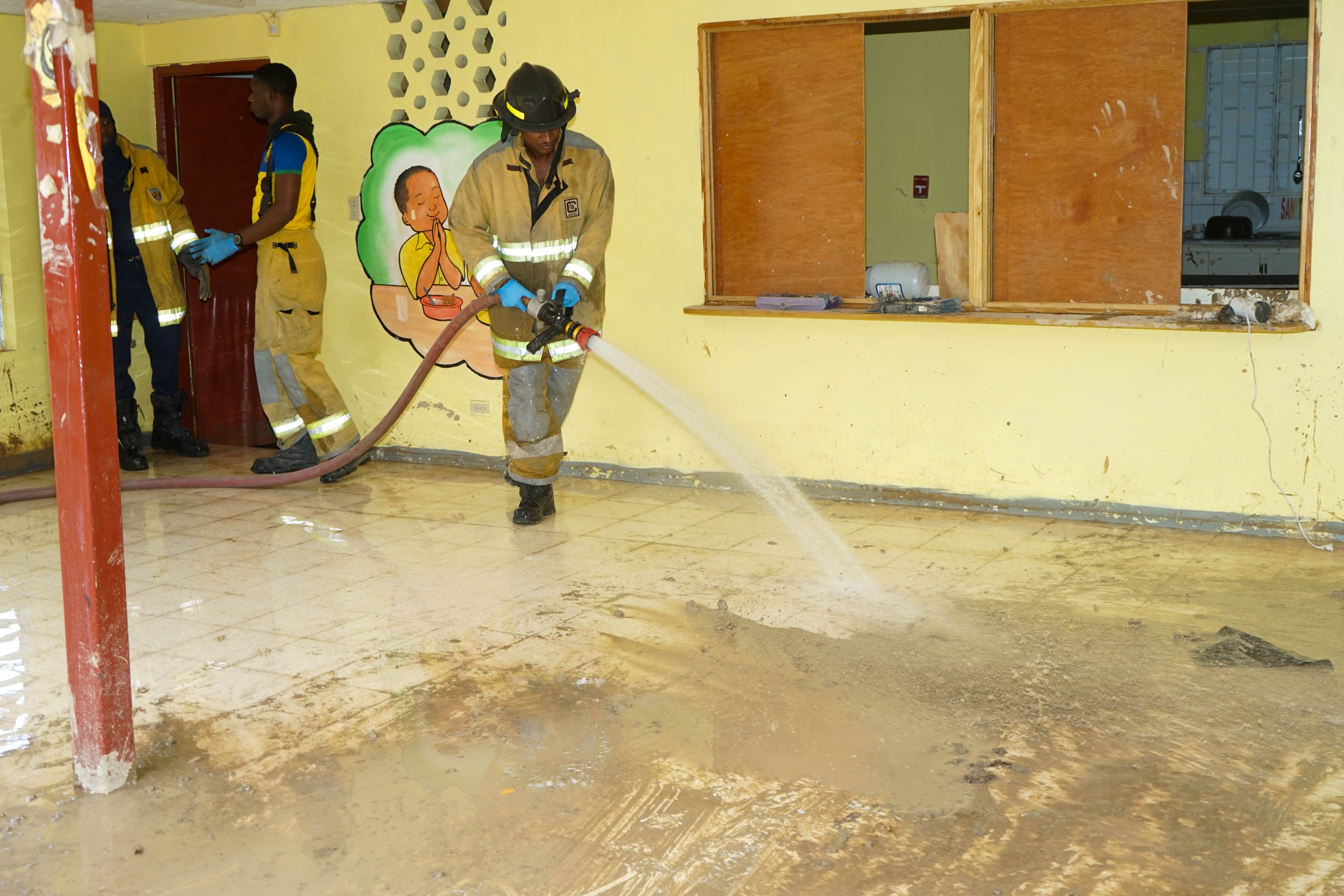
Photo Caption: A member of the Jamaica Fire Brigade washes away mud and debris from a section of the Dudley Grant Demonstration Basic School in Catherine Hall, St James. Several homes, businesses and facilities were inundated by floodwaters in addition to being damaged by category 5 storm winds wrought by Hurricane Melissa. The JN Foundation, through the ISupportJamaica Fund and partnerships, organised and funded a workday to clean up the early childhood institution. The school is one of the facilities receiving focus for assistance from the donated funds managed by the Foundation.
“So many came, sharing their own personal stories of friends and family they had in Jamaica, whilst others had visited Jamaica and wanted to help, and they all simply brought whatever they could,” she remembered.
Establishing partnerships with bold and benevolent private companies and institutions overseas and Jamaica, the JN Group, through its JN Foundation has, since then, been diligently distributing the donated items and carefully investing the cash contributions into delivering medical aid and food to needy and remote areas, as well as supporting core groups.
“We earmarked 40 per cent of the cash donations to repair severely affected early childhood institutions, which have been important pillars in their communities,” outlined general manager of the JN Foundation, Claudine Allen. The schools included the Dudley Grant Demonstration Basic School in Catherine Hall, St James, which was the most severely affected of the institutions identified for assistance.
Photo Caption: A child accepts a gift from Santa in this photo moment captured during an event at the William Knibb Memorial High School on Sunday, December 21. It was organised and hosted by FYI Consultancy Group in collaboration with the JN Foundation for residents of Trelawny who were severely affected by Hurricane Melissa. Funds donated by mainly Jamaicans overseas to the ISupportJamaica Fund managed by the Foundation assisted to bring some Christmas joy to people who did not experience season as a result of the hurricane.
“Through our JN Circle chapters, affiliated organisations and volunteers, we mobilised people, investing several man-hours and services into restoring the schools. And although there is still much more to do, the institutions can continue to edify and nurture our children who are at the most vulnerable stages of their lives,” explained Ms Allen, adding that despite their importance to child development, early childhood institutions in Jamaica are mostly privately run and severely under-resourced.
The remainder of the cash contributions have been used to address the needs of children’s homes and places of safety in devasted areas, homes for the elderly and at-risk groups (30 per cent), and the remaining 30 per cent is being used to support first responders.
“We’ve identified the Trelawny Infirmary, the Blessed Assurance Apostolate in St James, and a women’s shelter to receive assistance with rebuilding,” Ms Allen said. “Thirty per cent of the donations will also assist police youth clubs and JN Circle chapters with supporting community outreach efforts.”
Photo Caption: A resident of the Blessed Assurance home for the vulnerable in St James has his vitals checked by a member of the St John Ambulance Jamaica medical team. Funds donated to JN’s ISupportJamaica Fund, are also being used to support medical missions to remote and underserved communities severely affected by Hurricane Melissa.
Noting that JN Circles nurture and strengthen JN’s connections at the community level, Miss Allen added “Our members nominated groups, elderly and the most vulnerable families for help, providing evidence of loss, and helping them and us to direct the relief where it is most needed.”
Since Melissa’s landfall, the JN Foundation has conducted 14 outreach missions in four parishes, beginning as early as a day after the hurricane’s passage. On each mission it has brought medical services, in collaboration with St John Ambulance Jamaica, to treat injured survivors, conduct basic checkups and supply medication to those left without access. The Foundation has also provided counselling services to the traumatised and distributed care packages while also providing a meaningful and dignified Christmas to many who could have no festivities.
“Through donations and partnerships, our missions have attended to the medical needs of more than 700 people across four parishes and delivered more than 2,300 relief packages,” outlined Ms Allen. “And we continue on those missions because there are still many, particularly residents in remote communities, who remain without services and need the attention to help rebuild.”
“We are focused on helping to build back better,” she affirmed.
Photo Caption: A resident of Albert Town, Trelawny, speaks with JN chaplain, Reverend Dr Kevin Page, during a medical mission and intervention to the rural community a few weeks after Hurricane Melissa’s passage. The ferocious system left many residents of the community and across the parish shaken and in need. Funds donated to the JN Group’s ISupportJamaica Fund by mainly Jamaicans overseas are being used to fund interventions like these that reach remote communities and vulnerable groups.
Jamaica is losing billions of dollars annually due to motorcycle crashes, with unsafe and substandard helmets emerging as a major contributor to both fatalities and the country’s growing economic burden.
This was the warning from Sydoney Preddie, Lead for Youth and Education Programme, JN Foundation, during her address at the launch of the JS 374:2025 Jamaica Standard Specification – Protective Helmets for Road Users National Helmet Safety Standard by the Bureau of Standards Jamaica recently. Her address positioned road safety not only as a public health concern but also as a critical economic issue, with far-reaching implications for national productivity and economic growth and stability.
Referencing data, Ms Preddie argued that that motorcycle-related crashes are draining national resources at an unsustainable rate. She noted that regional estimates show that road traffic incidents account for three and five per cent of Gross Domestic Product (GDP) in Latin America. In the Jamaican context, she reasoned that this translates to more than $100 billion annually in crash-related costs, funds that she said could otherwise be invested in infrastructure, education, and job creation.
“This is not just about safety; it is an economic issue,”
Ms Preddie emphasised, highlighting the compound losses arising from healthcare expenses, reduced workforce participation, and long-term disability.
The cost of treating injuries alone is significant. It takes an average of $3 million to treat a single severely injured motorcyclist, she said, placing immense pressure on Jamaica’s already strained public health system.
Beyond direct medical costs, she underscored the hidden economic toll, including lost income for victims and their families, as well as reduced national productivity when working-age people, usually men, are killed or incapacitated.
Motorcyclists, she noted, represent one of the most vulnerable groups on the nation’s roads, accounting for over 30 per cent of annual road fatalities. In 2025 alone, there were 126 motorcycle-related deaths, contributing to more than 1,600 fatalities recorded since 2012.
Photo Caption:Sydoney Preddie, Lead for Youth and Education Programme, JN Foundation addressing the launched a new national standard for helmets worn by motorcyclists at the Jamaica Business Development Corporation Incubator and Resource Centre in Kingston recently.
Despite the risks, she said helmet quality remains a major concern. Ms Preddie revealed findings from a 2024 mystery shopper initiative in which 16 helmets being sold in stores were tested. Only one met the required safety standards she said, even though all were labelled as certified.
“The study exposed widespread issues, including weak chin straps, insufficient padding, and misleading labels, [which are] factors that significantly increase the likelihood of fatal head injuries in crashes,” she informed.
“The reality is that not all helmets offer protection,” she said, stressing that poor-quality imports have left Jamaican riders dangerously exposed.
The road safety professional argued that without proper regulation, Jamaica risks becoming a dumping ground for substandard safety gear, a trend observed in other developing countries. She cited Kenya as an example, where more than 90 per cent of helmets tested failed to meet safety standards.
However, she pointed to success stories within the region. In Guyana, the implementation and enforcement of helmet standards led to more than 80 per cent reduction in motorcycle fatalities, demonstrating the potential economic and social returns of strong regulatory action.
New Jamaican Standard Will Close Gaps
Dr Velton Gooden, executive director of the Bureau of Standards Jamaica said the newly introduced Jamaican standard is expected to address these gaps by strengthening oversight at the ports and ensuring that only certified helmets enter the local market. He said this represents a critical step toward reducing preventable deaths while safeguarding the country’s economic future.
With motorcycle use increasing amid the growth of delivery services and informal transport, Ms Preddie stressed the urgency of action.
“We are not only protecting motorcyclists,” she underscored, “we are protecting Jamaica’s economy.”
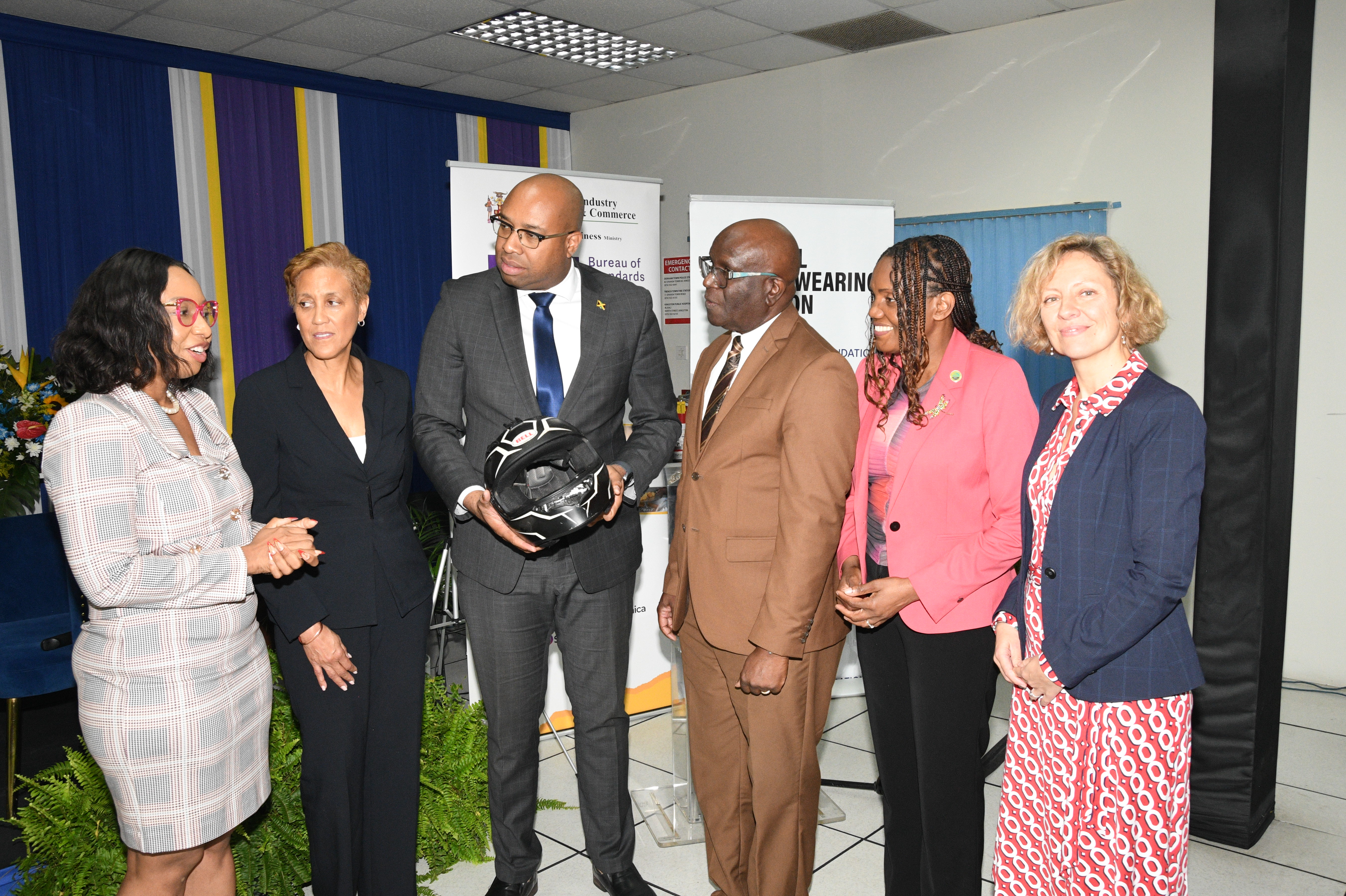
Photo Caption: Sydoney Preddie (left), Lead for Youth and Education Programme, JN Foundation in discussion with Jacqueline Millington (from second left), chair of the Standards Council at the Bureau of Standards Jamaica (BSJ; Delano Seiveright, state minister in the Ministry of Industry, Investment and Commerce; Dr Velton Gooden, executive director of the BSJ; Dr Sharonmae Smith Walker, chief executive officer of the Caricom Regional Organizational for Standards and Quality and Agnieszka Krasnolucka, programme director at the FIA Foundation. Occasion was the launch of BSJ Motor Cycle Helmet standard -JS 374:2025 at the Jamaica Business Development Corporation Incubator and Resource Centre in Kingston, recently.
Also addressing the launch of the standards, State Minister in the Ministry of Industry, Investment and Commerce, Delano Seiveright, reiterated that motorcyclists remain among the most vulnerable road users.
“Today marks a critical milestone in Jamaica’s ongoing efforts to strengthen road safety, consumer protection and our national quality infrastructure. The launch of JS 374:2025 Jamaica Standard Specification – Protective Helmets for Road Users represents far more than the introduction of a technical standard. It represents a decisive step by Jamaica to protect lives through science, regulation and coordinated national action,”
he explained.
Mr Seiveright said too many lives are being lost or are being altered permanently because of substandard protective equipment and failure to wear the equipment.
Jamaica is set to take a major step in the coming days towards enforcement of helmet wearing. In a multi-agency initiative, led by the JN Foundation, a capacity-building training activity is to be undertaken, aimed at empowering the JCF to improve enforcement strategy for motorcycle helmet safety.
Jamaica’s Road Traffic Act requires all motorcyclists and pillion riders to wear a correctly sized protective helmet with the chinstrap always fastened, as outlined in the Fifth Schedule of the regulations. The legislation further mandates that helmets must meet approved safety standards, and that every motorcycle sold must be accompanied by a compliant helmet. Offences created by the legislation are specific only to the manufacturers and importers.
The Jamaica Constabulary Force (JCF), JN Foundation, the Global Safety Partnership and the FIA Foundation signed an agreement in June 2025, for a two-year training programme on enforcement for members of the JCF. Participating in the signing of the agreement are (from left, seated) Parris Lyew-Ayee, chairman of the JN Foundation; Agnieszka Krasnolucka, programme director of the FIA Foundation; Dr Gary McKenzie, Assistant Commissioner of Police; and Dave Cliff, chief executive officer of the Global Road Safety Partnership. Looking on are Claudine Allen (left, standing), general manager of the JN Foundation and Delroy Simpson, chief technical director in the Ministry of National Security.
The training is being conducted under the auspices of the National Helmet Wearing Coalition (NHWC) for members of the Public Safety & Traffic Enforcement Branch (PSTEB) of the Jamaica Constabulary (JCF), with the first round to be conducted March 25-27.
The coalition, whose initiatives are managed by the JN Foundation, is an amalgam of various local and overseas road safety interests, including the National Road Safety Council, the FIA Foundation and the Global Road Safety Partnership (GRSP).
The training programme forms part of a Memorandum of Understanding signed in June 2025 between the JCF, GRSP and partner agencies, paving the way for a structured capacity-building effort targeting the enforcement of motorcycle helmet laws. During that visit, Dave Cliff, chief executive officer of GRSP, and his team assessed the JCF’s current approach to helmet enforcement and produced a detailed report and training plan to guide the rollout.
The first phase of training will run from March 25 to 27, targeting 25 potential trainers within the JCF. The programme incorporates classroom instruction and practical outdoor components and will unfold across several phases. The training is expected to be integrated into the JCF’s institutional training framework.
Representatives from all partner agencies underscored the national importance of the initiative, noting its potential to significantly impact public safety outcomes. Motorcycle injuries and related deaths account for a significant portion of road trauma in Jamaica. The Island Traffic Authority reports that there were 111 motorcycle fatalities last year, and so far, this year 11 have been recorded.
Claudine Allen, general manager of the JN Foundation, which leads implementation of the NHWC, says the partnership represents a critical investment in Jamaica’s safety and supporting enforcement.
“Strengthening enforcement capacity is essential if we are to reduce preventable motorcycle injuries and fatalities. We believe this investment in the JCF will make it possible,” she said.
Underscoring the significance of the programme’s launch, Mr. Cliff noted that the JCF has shown strong commitment to enhancing road safety enforcement.
“Our assessment made clear that targeted [and] sustained capacity building can make a measurable difference, and we are pleased to work alongside Jamaican partners to deliver international best-practice training,” he said.
The JCF has welcomed the initiative, highlighting the impact it will have on frontline policing.
“This training will strengthen our officers’ ability to enforce helmet wearing laws and identify stipulated standards of helmets in Jamaica consistently and effectively. Motorcycle crashes remain a major contributor to road trauma in Jamaica, and this collaboration helps ensure we are better equipped to protect lives,” said Senior Superintendent of Police, Lloyd Darby of PSTEB.
The partners outlined that a robust public communication campaign will accompany the training rollout to maximise visibility and reinforce national education on motorcycle safety.
The World Health Organisation (WHO) estimates that helmet wearing reduces the risk of death by 42 per cent and serious head injury by 69 per cent. Yet, research conducted by Market Research Services Limited in 2023 shows that 40 per cent of motorcycle drivers in Jamaica do not wear helmets while riding and 31 per cent of pillion passengers never wear helmets.
Civil society organisations (CSOs) across the region have been urged to treat financial management as a strategic tool for survival and growth. The advice was provided by Rose Miller, financial education consultant with the JN Foundation, while addressing delegates at the Caribbean CSO Conference and World NGO Day celebration in Jamaica, recently.
Rose Miller, financial education consultant with the JN Foundation addressing the conference at the Terra Nova Hotel.
Delivering a presentation under the theme ‘Sustaining Vision Through Strategic Financial Management’, Mrs Miller challenged organisations to move beyond basic bookkeeping and adopt financial strategies that directly influence programme continuity, innovation and long-term impact.
“We budget in our personal lives, and it’s the same thing for our businesses,” she told the audience from several Caribbean countries at the Terra Nova Hotel in Kingston, stressing that forecasting and disciplined monitoring are essential to ensuring bills are paid, obligations are met and programmes remain on track.
She underscored that accountability, reporting and good governance are no longer optional. Without strong oversight structures, she warned, organisations risk losing credibility and jeopardising their mission. She pointed to Social Return on Investment (SROI), proper tracking of funds and clear reporting systems as critical components of modern CSO management.
Commitment to the organization’s vision and mission, she explained, protects them from “mission drift”, which is the tendency to pursue funding opportunities that fall outside their core mandate. “Sometimes we go after funding from anywhere,” she noted, cautioning that overextending capacity can dilute outcomes and weaken impact.
The financial education consultant also highlighted the dangers of relying on a single funding stream. Drawing parallels with personal finance, she encouraged CSOs to diversify revenue sources to remain resilient, in the face of reduction in donor funding or economic shocks arising from natural disasters.
Referring to the impact of Hurricane Melissa, Mrs Miller said crises expose weaknesses in organisations that operate without reserves or adequate risk management tools. She encouraged CSOs to build financial buffers equivalent to three to six months of operating expenses and to consider insurance as part of their risk mitigation strategy.
“When we have no operating reserves, that presents challenges,” she said, noting that some organisations were forced to close their doors following Hurricane Melissa because they could not absorb the shock.
The CSO’s were also warned not to fall into common financial pitfalls: these include weak internal controls, poor documentation, blurred lines between personal and organisational accounts, and inadequate board oversight. She stressed that approval processes, proper separation of duties, and clear financial policies are fundamental to the stability of the organization and its mission.
In Jamaica, she reminded participants, compliance is closely monitored by the Department of Cooperative and Friendly Societies, making governance and timely reporting even more critical.
In keeping with the theme of the conference, ‘The Shift, Igniting Civil Society’s Next Chapter’, Mrs Miller said a significant shift in how financial resources are managed must take place beginning now. She urged organisations to treat finance as a driver of decision-making rather than simply a back-office function.
To guide that shift, she presented four pillars for strategic sustainability: purpose-driven budgeting, proactive cash flow management, strong risk and compliance systems, and diversified funding.
Purpose-driven budgeting, she explained, ensures that spending aligns with the mission and priorities, with clear distinctions between programme and administrative costs. Cash flow management requires tracking inflows and outflows, forecasting delays in grants and updating projections regularly so leaders can respond quickly to challenges.
On risk and compliance, she called for active governance structures, consistent reporting schedules, updated financial policies, and regular audits. Though audits may be costly, she described them as an essential investment in credibility and donor confidence.
She encouraged organisations to expand funding models beyond restricted grants and contracts to include individual donors, major contributors and income-generating activities. While grants often come with strict conditions, diversified and funding can provide the flexibility and resilience needed to weather disruption.
“Finance enables the mission,” she said, emphasising that disciplined financial management ultimately strengthens community impact.
Her message resonated strongly with attendees, many of whom acknowledged the growing demand from funders and regulators for transparency, accountability and strategic oversight.
As Caribbean CSOs navigate an increasingly complex operating environment, Mrs Miller’s call was clear: sustainable vision requires strategic financial leadership.
Even with years of experience in finance, Senior Accountant, Sherry-Lee McLean, says enrolling in the JN Financial Academy’s Smarter Credit Course offered fresh insight and practical lessons that have further strengthened how she approaches money management.
Working in the financial services industry, she explained that her decision to enroll was driven by professional curiosity. After seeing information about the course through the JN Group E-newsletter, she decided it was an opportunity worth exploring.
“I just wanted to see what the course was about and if there was anything that I needed to know, just for knowledge’s sake,” she said.
Despite her background, the course proved to be insightful and informative. She pointed to debt management strategies as one of the areas where she gained new understanding.
“I knew about debt consolidation as a way of paying off loans, but I didn’t know about the snowball and the avalanche methods,” she shared, noting that the course helped her to clearly understand terminology and concepts she had previously encountered informally.
The interactive elements also stood out, particularly those focused on budgeting.
“I used to record my expenses, but I wouldn’t normally do a budget, per se,” she said. “The budgeting activity was very informative. I found the course educational and, most importantly, helpful.”
She added that the course offered practical, real-life lessons that many people often overlook. One example was guidance on preparing for annual expenses such as motor vehicle insurance payments by setting aside small amounts each month.
“A lot of us don’t think that way,” she said. “But by budgeting for these expenses monthly, you will ensure that you actually have the money when the payment becomes due.”
According to her, the design of the Smarter Credit Course makes it accessible to everyone, regardless of their level of financial knowledge.
“It’s easy to navigate, the material is clear, and the presenters break things down in a way that even someone with no background in finance can understand,” she said. “It’s for anybody, and there’s always something new to learn.”
Rose Miller, financial education consultant at the JN Foundation, underscored the importance of financial education in empowering individuals to make better decisions.
“The Smarter Credit Course is designed to help Jamaicans at every stage of their financial journey build confidence in how they understand and manage money and credit ,” she related. “By improving financial literacy, participants are better equipped to avoid common pitfalls, reduce debt stress, and plan more effectively for the future.”
The course consists of a self-paced portion, complimented by a series of webinars. The next webinar will take place on February 25.
Members of the public are invited to enroll in the Smarter Credit Course by registering on the JN Financial Academy’s website at jnfinancialacademy.com.
The JN Financial Academy is administered by the JN Foundation.
For this senior accountant, the experience reinforced a simple truth: there is always something new to learn and the area of finance is no exception, even for financial professionals. And this learning can lead to smarter choices and greater financial well-being.